 Nanaimo, BC · In-home consultations
 250-713-2145
 Mon–Fri 9 am–5 pm


 Get Your Free 3D Concept
Post by: Jamie Holling | 22 Jul, 2026
Most people think a tired kitchen leaves them two choices: live with it, or tear everything out and start over. A recent project of ours here in Nanaimo makes the case for a third way — and the fastest way to understand it is to see it.
Drag the handle. Same room, same layout, photographed from the same spot.
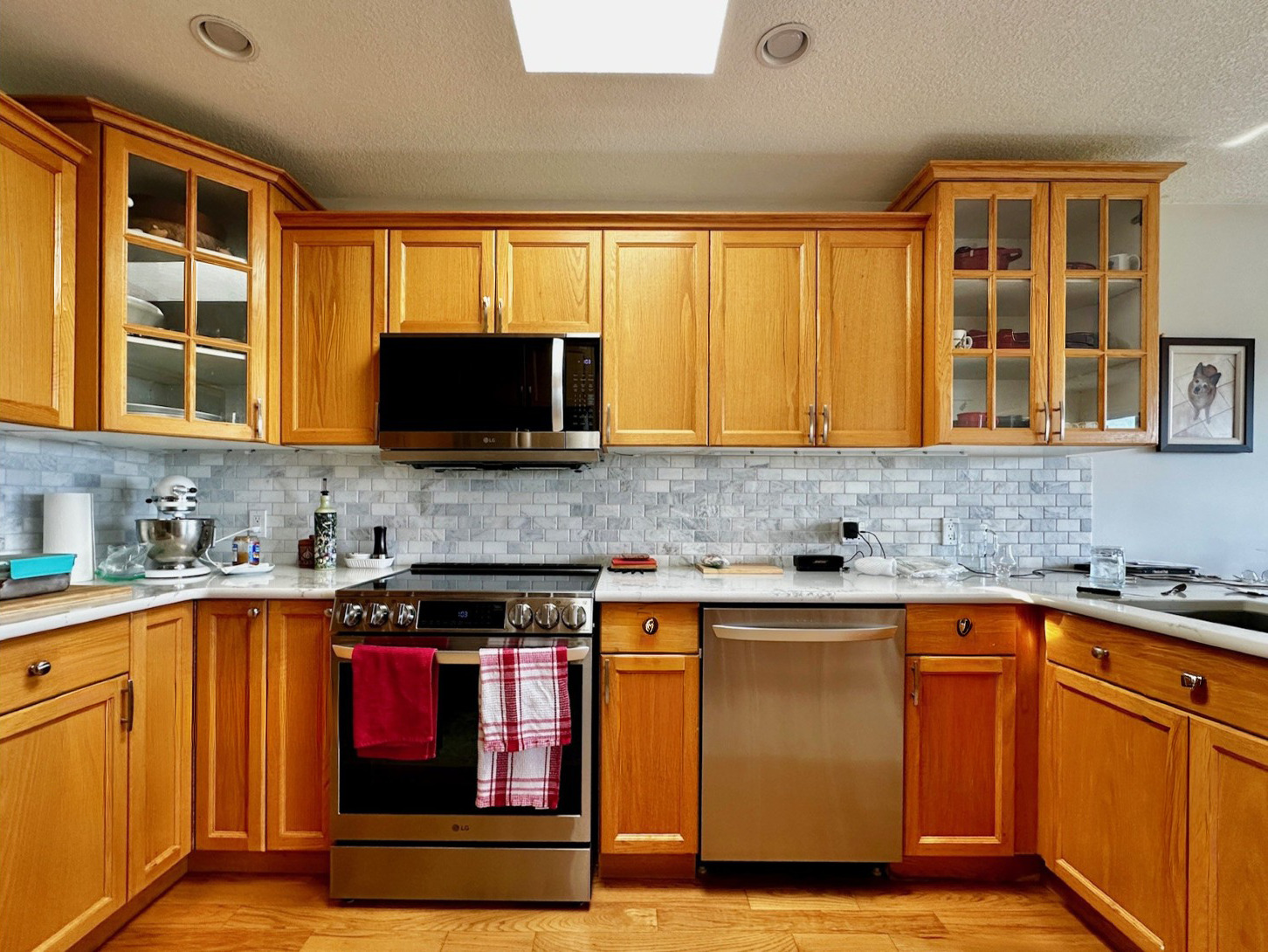
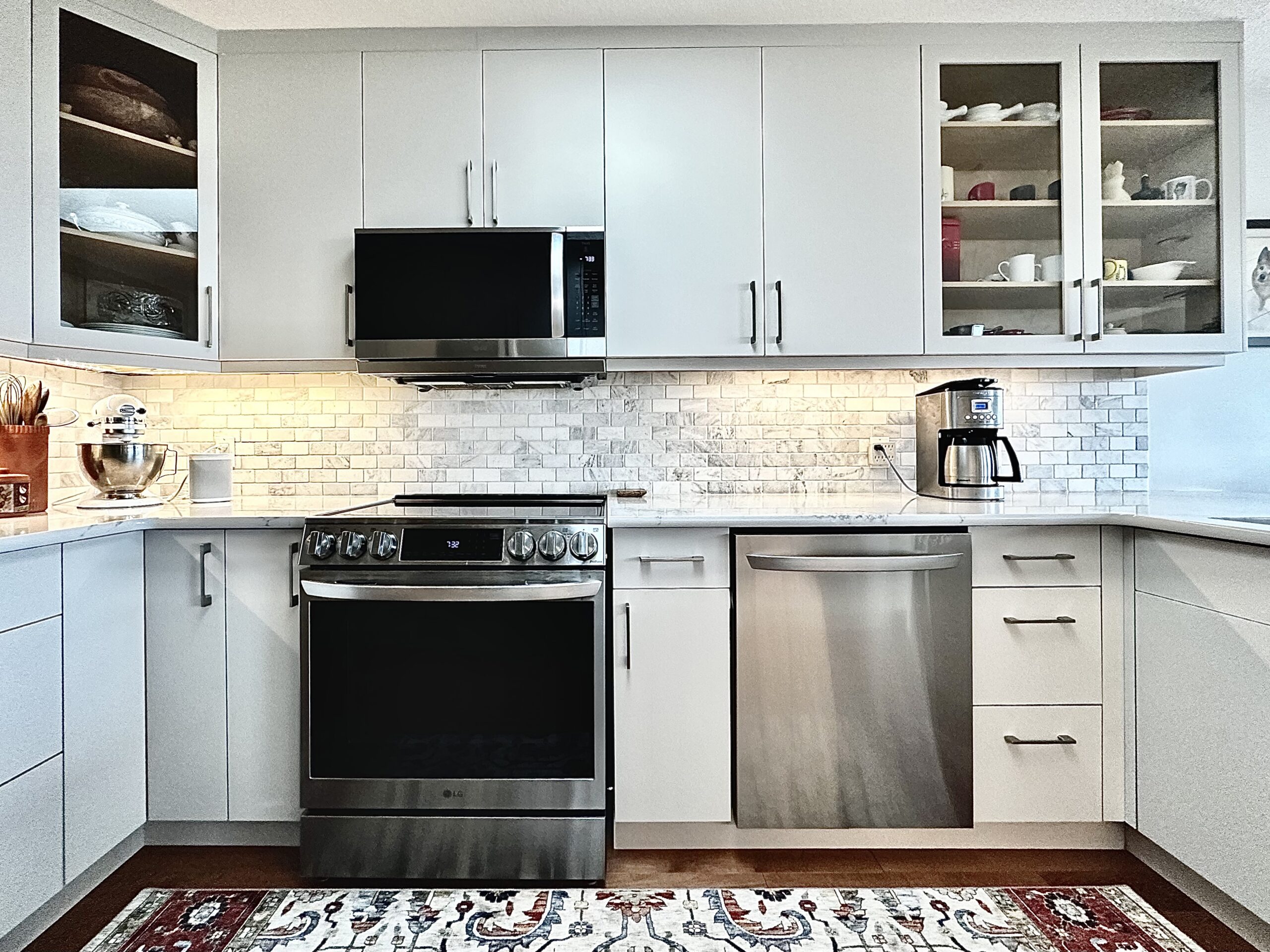

Drag to compare — the original oak kitchen, and the finished result from the same spot.
A surprising amount of the “after” was already there before we started. That’s the whole idea.
Refacing, full custom, or the middle path
Every kitchen update comes down to one question: how much actually needs to change? There are three answers — and each one keeps everything the path before it does, then adds a layer.
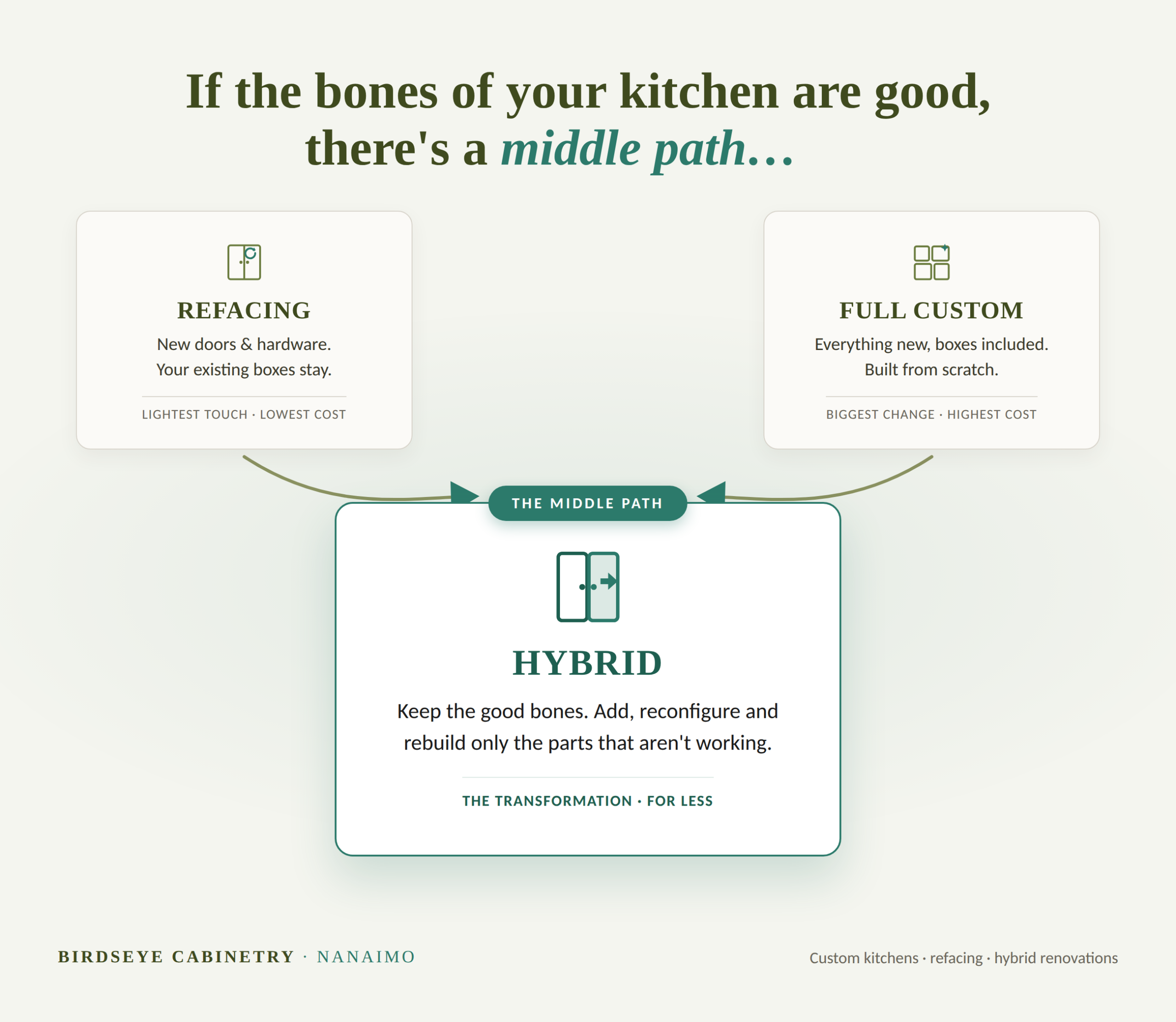
If your cabinet boxes are solid — and in a lot of Island homes they are — you rarely need to send them to the landfill to get the kitchen you want. This project took the middle path: a partial renovation, or what some call a hybrid. Here’s how.
Why it reads as a brand-new kitchen
Nothing was wrong with this kitchen. It was a well-built oak kitchen that had drifted out of style — dark, busy, a little tired. The owners wanted modern and streamlined, without paying to demolish a room that was half-fine.
Here’s a way we think about style in the shop: every door carries visual information. A traditional door — raised panels, profile work, strong grain — carries a lot of it. A flat panel in a soft matte finish carries very little. Neither is wrong; it’s about the feeling you want the room to have.
These owners wanted calm and quiet. So we went to flat-panel doors in a soft-touch matte and lightened the colour overall — less for the eye to travel over, more light in the room. Brighter and more open, without touching a wall.

The full reveal: flat-panel doors, a lighter palette, and uppers taken to the ceiling.
Down low: keep the boxes, fix the storage
The lower boxes were sound, so we kept them — but we didn’t just hang new doors. We converted the lowers to deep drawers on Blum soft-close runners. If you’ve ever crouched into the black hole at the back of a base cabinet, you know why: deep drawers bring everything to you. It’s the biggest day-to-day upgrade in most kitchens we build, and you don’t need new boxes to get it.
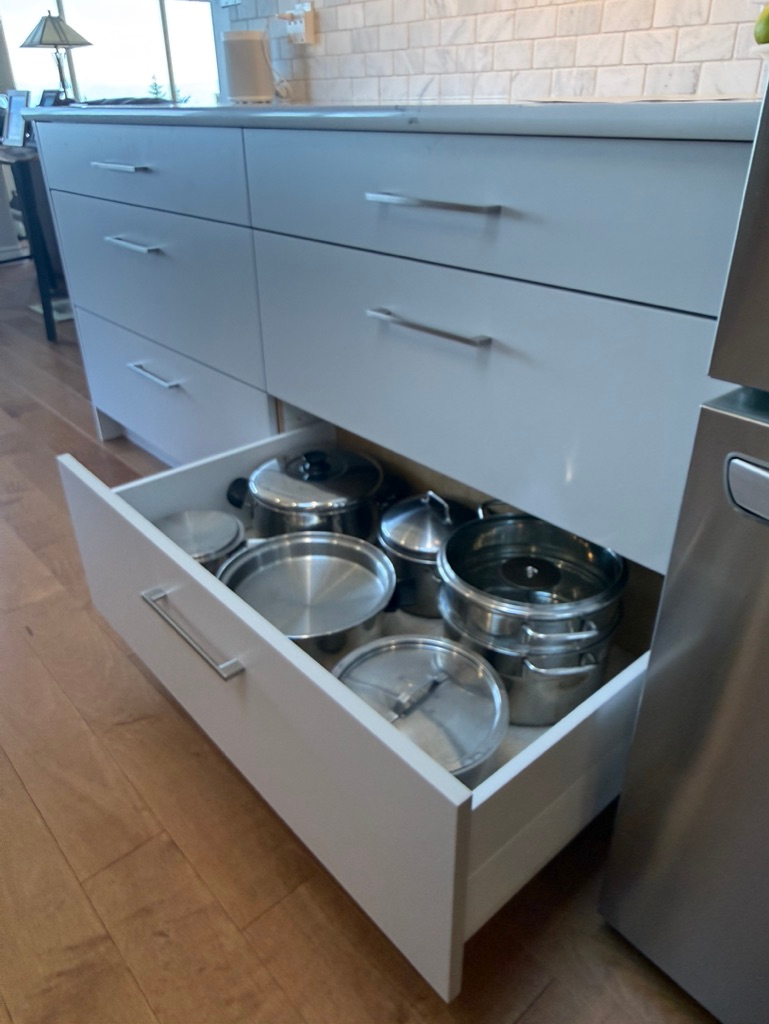
The payoff of keeping the boxes: deep Blum Merivobox drawers where the reach-in cupboards used to be.
The money goes where it actually changes how the room looks and works — not into rebuilding what was already right.
Up high: a different story
The old uppers gave the kitchen’s age away. They stepped up and down — some cabinet tops higher than their neighbours, a multi-level look that was everywhere fifteen years ago. You can’t reface your way out of that; the boxes themselves are the wrong shape. So every upper is new.
Flat-panel cabinets, run to the ceiling in one level line and finished with crown. That erased the stagger, turned the dead space above the old cabinets into real storage, and — since we were building new anyway — let us rework the layout up top, adding glass-insert display cabinets to break up the run.
So: down low, essentially a reface. Up high, essentially a new kitchen. Half and half, in one room — which is exactly what a partial renovation is.
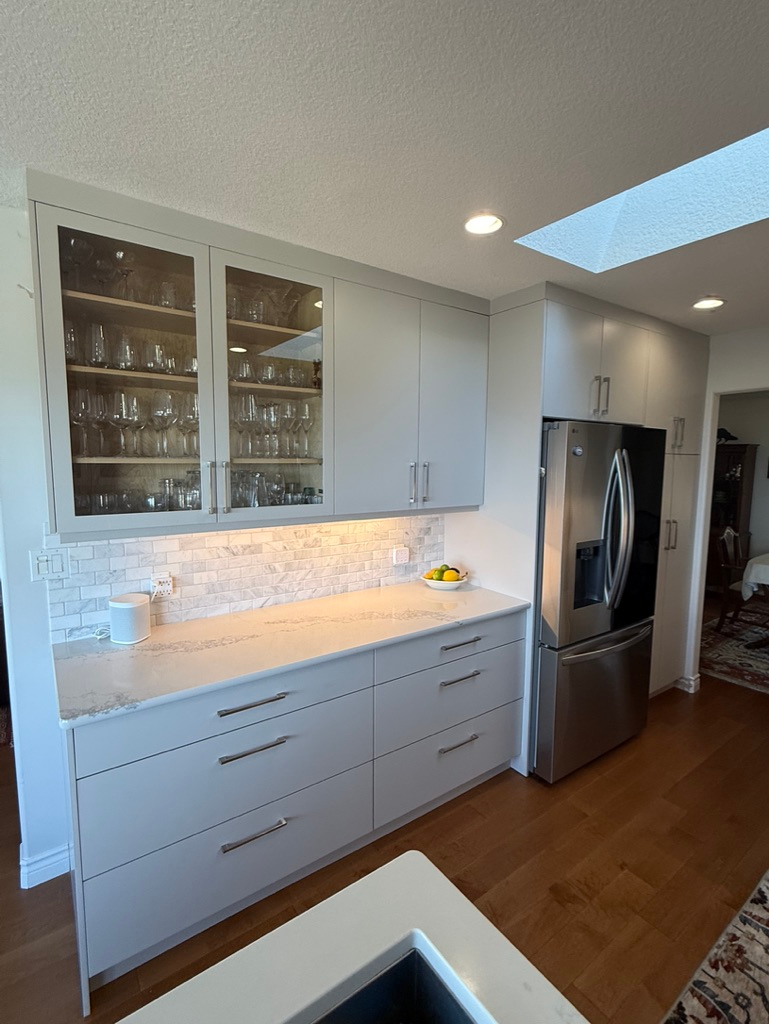
The opposite wall: new glass-insert uppers over a full run of deep drawers.
What we didn’t touch
The quartz counters and marble subway backsplash were still perfect, so they stayed — along with the peninsula and the layout itself. Nothing that was already right got rebuilt.
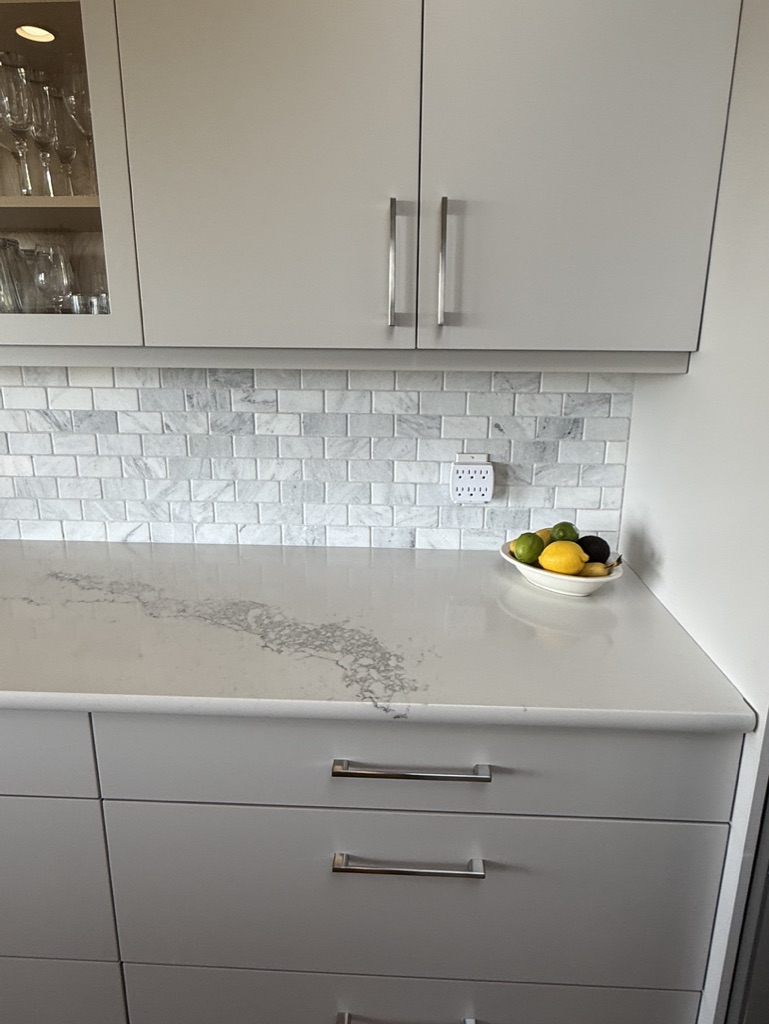
Already right: the quartz counters and marble subway tile stayed exactly where they were.
When the middle path is the right one
A partial renovation isn’t the answer for every kitchen. If the layout fights you, or the boxes are water-damaged or falling apart, a full custom kitchen is the right call — and we’ll say so. But if the real problem is that your kitchen looks dated, feels dark, or wastes storage, and the bones are good, the middle path usually buys the biggest change for the money.
One question is worth answering before you spend a dollar: which parts of your kitchen actually need to change? If you’re not sure, that’s exactly what we’re for.
Not sure which path your kitchen needs?
Refacing, a partial renovation, or a full custom kitchen — book a free, no-obligation in-home visit and we’ll tell you straight what we’d do in your home.
