Stained or Natural? An Honest Expert Guide to Solid Wood Cabinet Doors
Post by: Admin | 12 May, 2026
When homeowners come to us for solid wood cabinets, almost everyone eventually arrives at the same question: do we stain these doors a specific colour, or leave the wood in its natural state under just a clear lacquer?
Both options start with the same beautiful raw material and the same protective topcoat. The real choice is whether you want to nudge the wood’s colour in a deliberate direction — or let the wood itself set the tone.
After 15+ years of installing both, we’ve learned this decision is rarely about looks alone. It’s really about how the doors will age, repair, and live with you over the next 10 or 20 years.
What Staining Actually Does
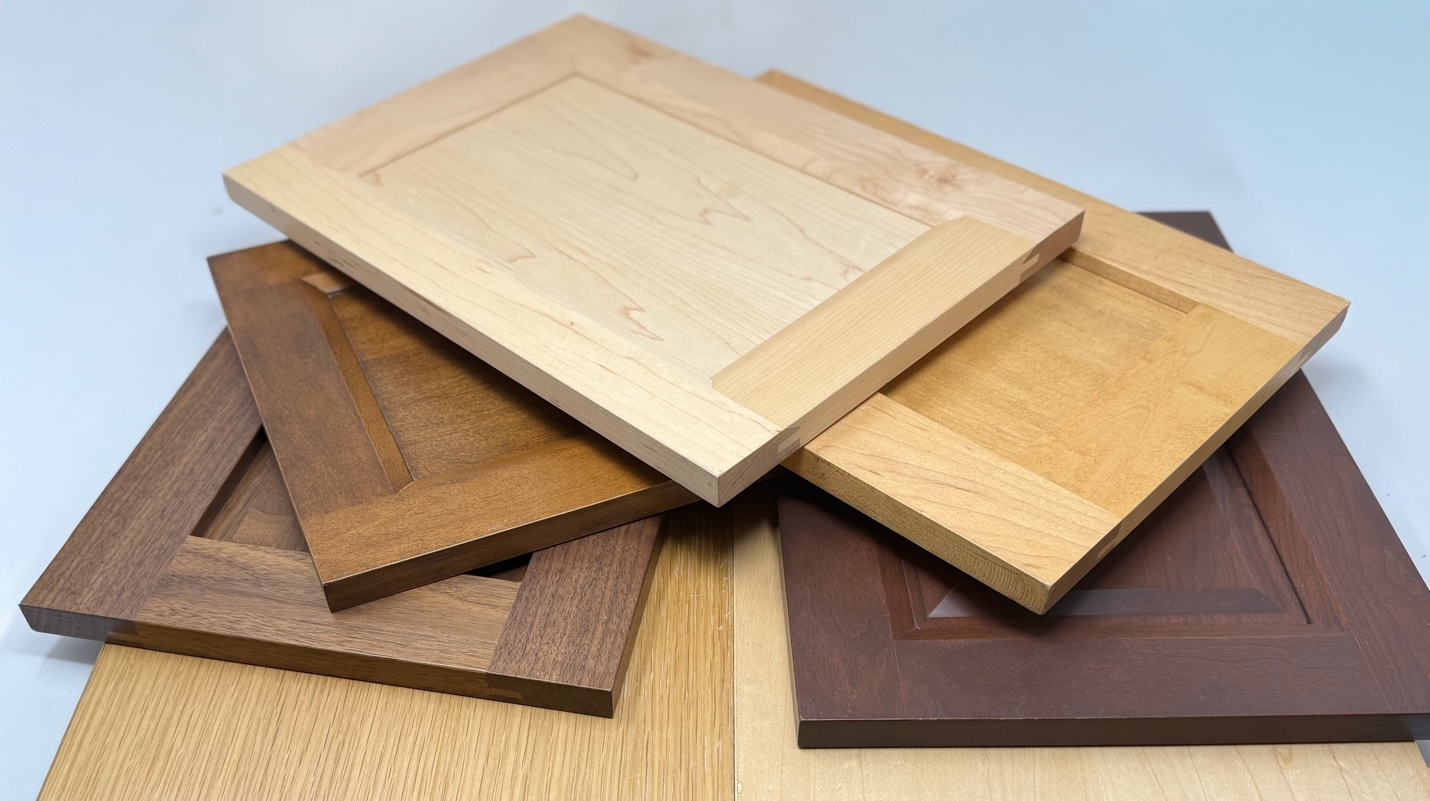
A stain is a thin, pigmented liquid that soaks into the wood, shifting its colour while still letting some grain show through. Done well, it can give you a dramatic, cohesive look that ties perfectly into a specific design palette.
Different woods take stain very differently:
- Eastern Maple accepts stain evenly because its grain is fine and subtle. The result is consistent and clean — but be aware that on finer-grained woods, dark stains can start to look more like a solid painted colour than a textured wood door.
- Red and White Oak have bold, prominent grain that stains beautifully and develops real depth, particularly with mid-tone stains that highlight rather than cover the wood’s character.
- Cherry and Walnut are usually not heavily stained, and there’s a reason for this. As cabinet experts at Deslaurier note, most homeowners use just a clear coat finish on cherry and walnut — these woods are prized specifically for their natural colour, so covering them with a deep stain defeats the purpose of choosing them in the first place.
A general rule worth knowing: the deeper the stain, the less natural grain you’ll see. A heavy dark stain on a finely grained wood can mute exactly what made the wood interesting to begin with.
The Quiet Drawback of Stained Doors
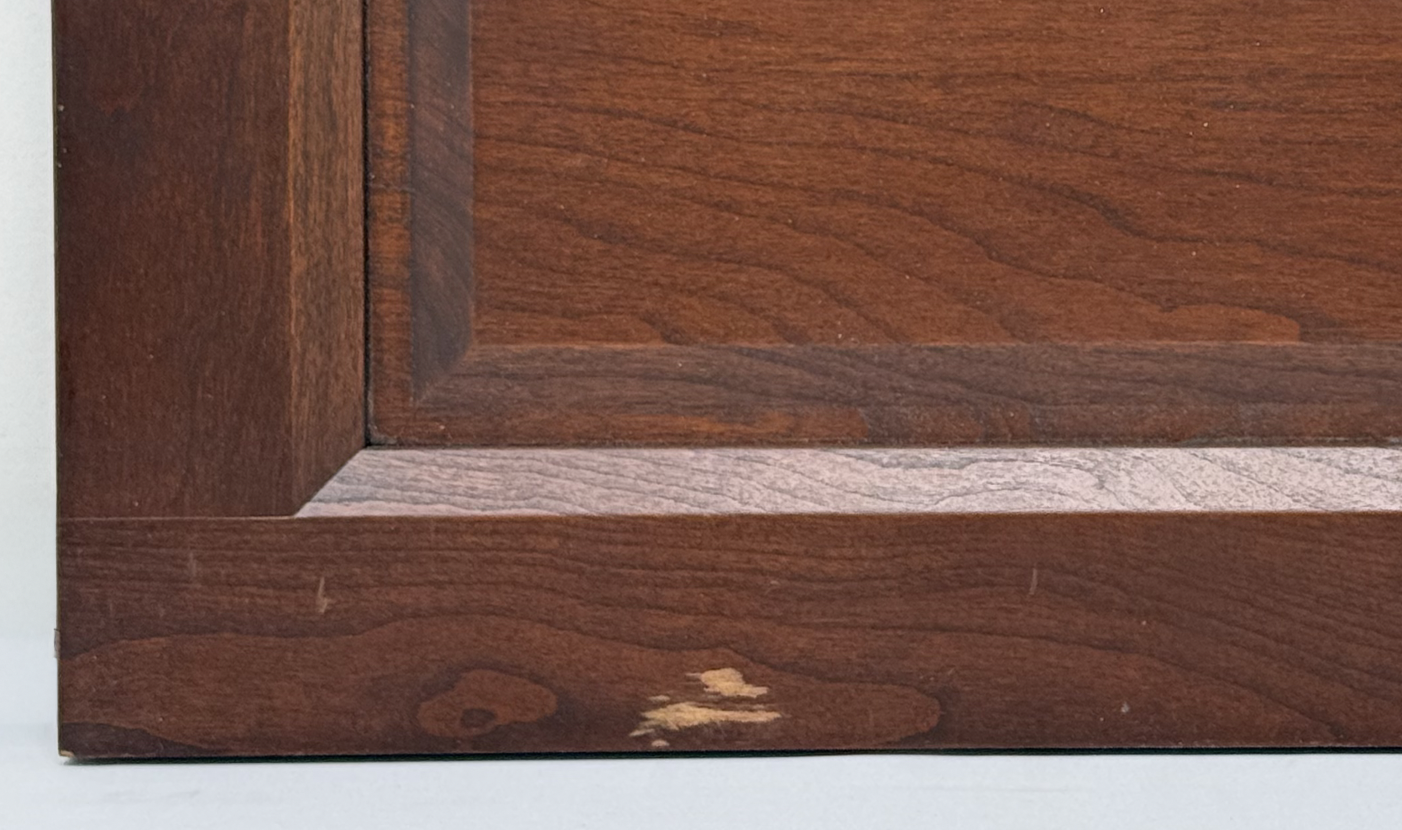
This is the photo that explains the single biggest reason we have this conversation with homeowners every year. That’s a stained door, five to ten years into normal family life. Every bright mark is a scratch — from a fingernail, a key, the corner of a heavy pot — that cut through the lacquer and through the stain layer, revealing the lighter natural wood underneath.
It’s a chemistry issue, not a craftsmanship one. Stain lives in the very top fraction of the wood. The moment something sharp gets past the clear topcoat, the contrast underneath shows. On a deep, dark-stained door, those bright marks can stand out enough to catch your eye every time you walk into the room.
Touch-ups are possible, and a skilled finisher can get close — but a perfect blend is genuinely hard. The original stain colour also shifts slightly as the wood ages, which means even a fresh batch of the same stain rarely matches exactly anymore. Many families simply learn to live with the marks; others end up frustrated their beautiful kitchen didn’t wear as gracefully as they hoped. This isn’t a reason to avoid stained doors. It’s a reason to go in with eyes open about how they age.
The Case for Clear-Coated Natural Wood
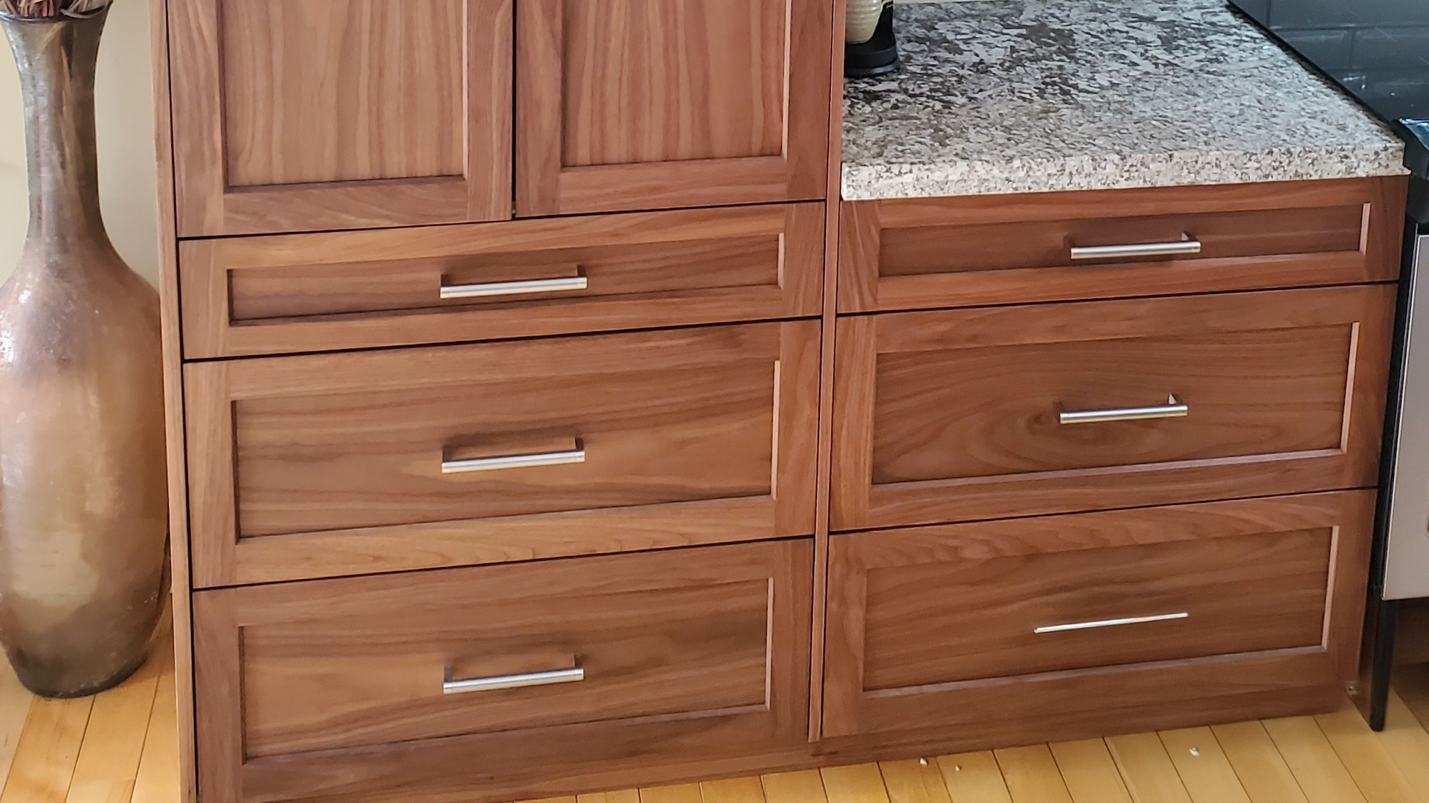
When you put a clear lacquer over the wood’s natural colour, you keep the option to maintain those doors easily for the long haul.
If the lacquer gets scratched, the wood underneath is the same colour as the rest of the door. A skilled refinish — a light sanding, a fresh coat of clear lacquer — can blend the repair almost invisibly. There’s no pigment layer to match. With reasonable care, these doors can look beautiful for decades with only minor maintenance.
There’s a second, deeper consideration too: natural wood changes colour on its own.
The Aging Story Nobody Tells You
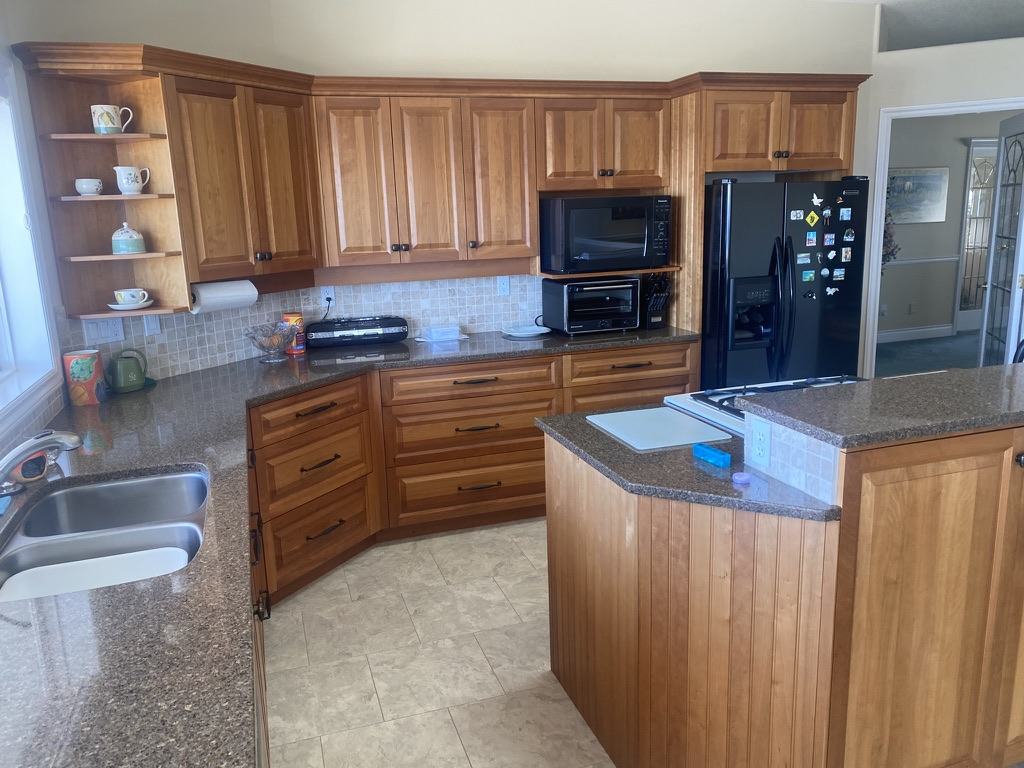
Here’s something most furniture experts agree on but few homeowners realize when they’re choosing doors: all solid wood changes colour over time. Even under a clear coat, the wood beneath continues to oxidize and respond to light.
According to fine furniture makers, the change is driven primarily by oxidation and UV exposure, and it can be slowed but not stopped. Most of the shift happens in the first year, then continues subtly for many more. Each species has its own story:
- Cherry starts much lighter than people expect — almost a pale straw colour — and develops its famous rich reddish-brown over roughly six months to a year. It’s the most dramatic colour shift of any common cabinet wood, and many designers consider it cherry’s defining feature.
- Maple starts creamy white and gradually develops a warm amber or honey patina, with the most noticeable change in the first few years.
- Walnut goes the opposite direction — it starts dark chocolate brown and gradually lightens, developing soft honey undertones over the years.
- White Oak experiences relatively little colour change, just a slow deepening of its golden tones.
So when you choose a clear-coated natural wood door, you’re not just choosing today’s colour — you’re choosing where the wood is headed. That’s part of why we encourage clients to think a year out, not just at the moment of installation.
A Practical Way to Decide
Here’s the framework we walk through with clients:
Choose a stained door if:
- You have a very specific colour palette you need to match
- You love the look of a particular tone and you’re comfortable with the long-term scratch trade-off.
- Your kitchen sees light to moderate use, or you’re not bothered by the natural marks of family life.
Choose clear-coated natural wood if:
- You want doors that age gracefully and stay easy to maintain.
- You love the species itself and want its natural beauty to be the star.
- You’re staying in the home long-term and want every scratch to be a repairable one.
- You’re working with cherry, walnut, or another wood whose natural colour is the whole point of choosing it.
There’s no universally correct answer — both approaches can produce a stunning kitchen. But going in with eyes open about how each will age makes a real difference in whether you still love your doors a decade from now.
A Quick Word on the Topcoat
One detail worth mentioning: the clear lacquer itself matters too. Standard polyurethane finishes tend to yellow over time — which is fine on stained wood (it enhances the warmth) but can subtly shift the look of lighter natural woods. Modern catalyzed lacquers and conversion varnishes stay clearer longer. It’s always worth asking any cabinetmaker what topcoat they use and how it ages.
The Bottom Line
Solid wood doors are an investment, and the finish you choose is one of the few decisions that affects every day of your kitchen’s life — from the first moment you turn on the lights to the day you eventually replace it.
We’re happy to bring real samples — Eastern Maple, Cherry, Red Oak, White Oak, Walnut — into your home so you can see how each one looks against your countertops, flooring, and natural light. We’ll talk through the trade-offs honestly and help you choose the door that will still look beautiful at the ten-year mark, not just on installation day.
Free in-home consultation, real samples, no pressure — just practical advice from a small family team that’s been doing this on Vancouver Island since 2010.